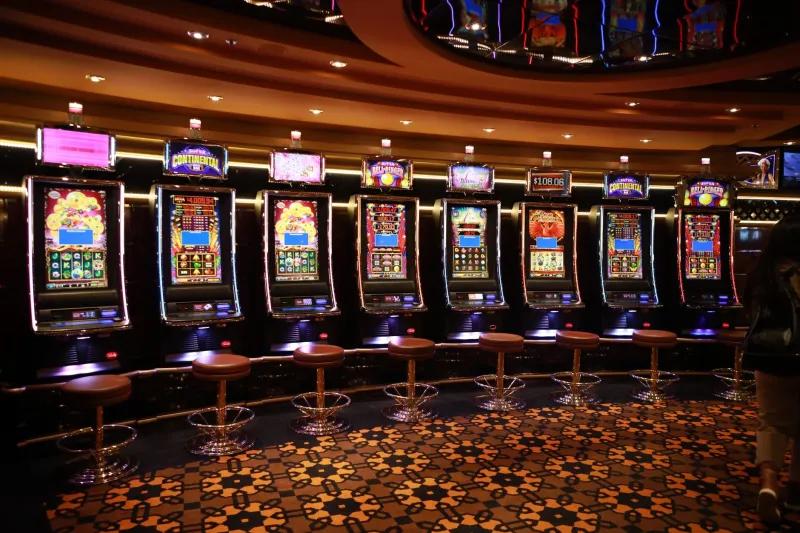
Spinning Through Time: How Pokies Went From the Corner Pub to Your Phone Screen

Ask any Australian over the age of thirty about their first pokie memory and you'll likely hear something involving a smoky pub, a cold schooner, and the satisfying clunk of a mechanical lever being pulled. That tactile, almost ritual experience is etched into the national consciousness. But pokies in Australia didn't start there — and they certainly haven't stopped evolving.
The journey from those early mechanical contraptions to today's immersive online platforms like Golden Reels is a fascinating one, shaped by regulation, technology, and the uniquely Australian appetite for a bit of a flutter.
The Early Days: Mechanical Machines and Pub Culture
Slot machines first arrived in Australia in the early twentieth century, though their presence was largely underground for decades. The legal landscape was murky at best. It wasn't until 1956 that New South Wales became the first state to legalise poker machines — and even then, only within registered clubs. This decision would prove enormously consequential for Australian social life.
Clubs quickly embraced the revenue stream. RSL clubs, bowling clubs, and Workers' clubs across NSW began installing rows of mechanical machines, and the pokie became a fixture of the working-class social scene. These weren't glamorous casino floors — they were community spaces where locals gathered, and the machines were simply part of the furniture.
Other states followed at their own pace. Victoria held out until 1992, making it one of the last to legalise gaming machines outside of casinos. Each state developed its own regulatory framework, a patchwork of rules that still defines the landscape today.
The Technological Leap: Video Pokies Change Everything
The 1980s brought a seismic shift. Video poker machines — the ancestors of the video pokies we know today — began replacing their mechanical counterparts. Rather than physical reels spinning behind glass, players were now watching digital representations on a screen. The experience changed fundamentally.
Game developers seized on this new canvas. Suddenly, pokies could feature multiple paylines, bonus rounds, animated symbols, and themed graphics. Australian manufacturers like Aristocrat Leisure, founded in Sydney, became world leaders in pokie design during this era. Games like Aristocrat's iconic Choy Sun Doa and Where's the Gold became household names across the country, their distinctive sounds instantly recognisable to anyone who'd spent time in a club or pub.
By the 1990s, the electronic gaming machine had become a sophisticated product, and Australia had one of the highest rates of pokie usage per capita in the world. Regulatory bodies scrambled to keep pace, introducing measures around maximum bet limits, mandatory pre-commitment features, and responsible gambling messaging.
Regulation Tightens: Balancing Fun and Responsibility
As pokies grew in popularity, so did scrutiny of their social impact. The Productivity Commission's landmark 1999 report into Australia's gambling industry shone a harsh light on problem gambling statistics and called for meaningful reform. States and territories responded with varying degrees of urgency.
Key changes rolled in over the following two decades: reduced maximum bet amounts on certain machine types, mandatory clocks and natural light requirements in gaming venues, self-exclusion schemes, and the introduction of the National Self-Exclusion Register (BetStop) in 2023. Venues were required to train staff in Responsible Service of Gambling (RSG), mirroring the familiar RSA framework used in liquor service.
These weren't just bureaucratic box-ticking exercises. They reflected a genuine cultural reckoning with the role of pokies in Australian life — acknowledging both their entertainment value and their potential for harm.
The Digital Revolution: Online Pokies Find Their Audience
The internet changed everything, as it tends to do. By the mid-2000s, online casinos were beginning to attract Australian players, offering access to slot games from the comfort of home. The Interactive Gambling Act of 2001 had attempted to restrict online casino services to Australians, but enforcement remained complicated, and player appetite was undeniable.
What online platforms offered was something land-based venues couldn't easily match: convenience, variety, and accessibility around the clock. A player in regional Queensland no longer needed to drive an hour to the nearest club. Someone who preferred playing at midnight in their pyjamas could do exactly that.
The game libraries expanded dramatically. Where a physical venue might host fifty or a hundred machines, online platforms could offer thousands of titles — from classic three-reel fruit machines that nodded to the mechanical era, to elaborate video pokies with cinematic graphics, cascading reels, and multi-level bonus features.
Where Golden Reels Fits In
Platforms like Golden Reels represent the current chapter in this long story. The goal isn't to replace the pub pokie experience — it's to honour what made it compelling in the first place while delivering it in a format suited to contemporary Australian life.
That means a curated game library featuring titles from trusted developers, a mobile-first experience that works whether you're on the couch or the commute, and a genuine commitment to responsible gaming tools. Features like deposit limits, session timers, and self-exclusion options aren't afterthoughts — they're central to what a trustworthy platform looks like in 2024.
The sounds and symbols might be digital now, but the thrill of watching reels align? That hasn't changed a bit.
What Comes Next
The evolution of Australian pokies is far from finished. Live dealer technology, augmented reality concepts, and increasingly personalised gaming experiences are all on the horizon. Regulatory frameworks will continue to adapt, and player expectations will keep rising.
But the core appeal — that mix of anticipation, entertainment, and the occasional golden moment when everything lines up — has remained constant through mechanical levers, video screens, and now smartphone apps. Australia's relationship with the pokie is long, complicated, and genuinely fascinating. And if the last seventy years are any guide, the next chapter will be just as interesting.