Why Some Pokies Feel Lucky: The Psychology and Math Behind Your 'Hot Machine' Instinct
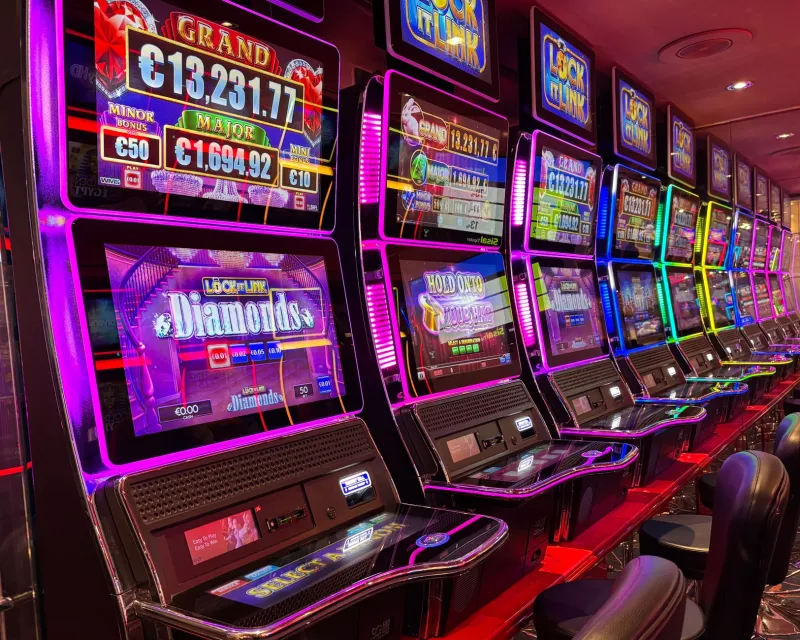
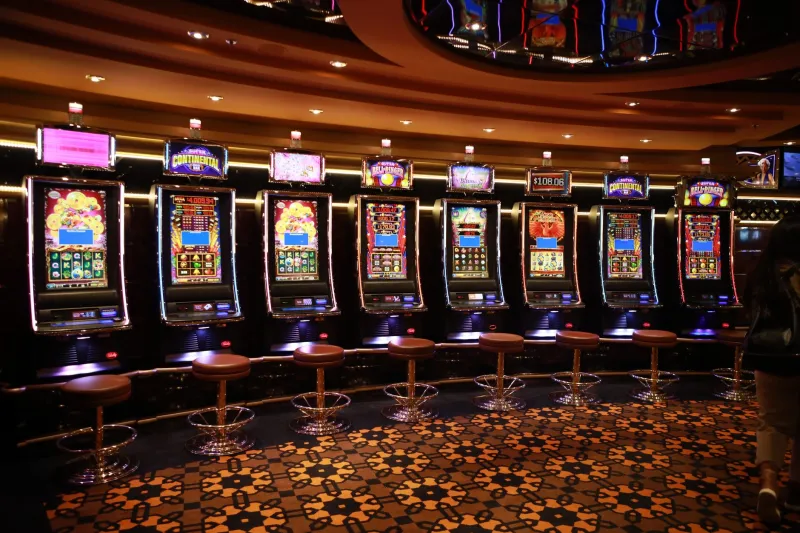
There's a moment every pokie player knows. You sit down at a machine — or load one up on your phone — and something just clicks. Maybe it's the colour scheme. Maybe it's the sound it makes when the reels slow down. Maybe your mate Dave won $400 on it last Tuesday. Whatever it is, the machine feels hot, and you're convinced your session is about to be a good one.
But here's the thing: that feeling isn't random. It's the product of some seriously clever design, a dash of mathematics, and a brain that's been wired over millions of years to find patterns whether they exist or not. Let's unpack what's actually going on.
Your Brain Is a Pattern-Finding Machine (Even When There Are No Patterns)
Humans are extraordinary at spotting patterns. It's an evolutionary trait that kept our ancestors alive — if the rustling in the grass sometimes meant a predator, it made sense to assume it always did. The cost of a false alarm was low. The cost of ignoring a real threat? Much higher.
Fast-forward a few thousand years, and that same mental wiring sits behind your pokie screen. When a machine pays out twice in a row, your brain files that away as meaningful data. When the reels almost line up three times straight, your brain reads that as a signal you're close to a win. Neither of those observations is statistically useful — the RNG (random number generator) doesn't remember your last spin — but your brain doesn't care. It's already building a narrative.
This is called the gambler's fallacy, and it's one of the most studied cognitive biases in existence. It's also one of the most persistent, even among people who fully understand it intellectually.
The Role of Near-Misses in Keeping You Hooked
Game developers — and this is well-documented in gaming research — deliberately engineer near-miss outcomes into slot mechanics. When two jackpot symbols land on the payline and the third stops just above or below, that's often not pure chance. Many games are coded to produce these near-miss sequences at a higher rate than random probability would naturally generate them.
Why? Because near-misses trigger almost the same neurological response as an actual win. Dopamine releases. Heart rate increases. Your brain says so close — try again. It's a feedback loop that keeps sessions going longer than players often intend.
For Aussie players spinning online, this is worth knowing because it helps explain why certain games feel more exciting than others — not because they're paying better, but because they're designed to feel that way.
Sound Design: The Invisible Persuader
Close your eyes during your next session and just listen. The sounds in a well-designed pokie aren't background noise — they're a carefully constructed emotional environment. Winning jingles are pitched in major keys. The reels slow with a satisfying mechanical rhythm. Even small wins (sometimes wins that don't cover the cost of the spin) are accompanied by celebratory audio and visual effects.
This is called losses disguised as wins, and it's one of the more controversial elements of modern slot design. You bet $1.50, win 40 cents, and the machine celebrates like you've hit something meaningful. Over a long session, these micro-celebrations create a distorted sense of how the game is actually performing.
Studies out of the University of Waterloo and several Australian gaming research bodies have examined this phenomenon specifically in the context of electronic gaming machines (EGMs) — the same category that covers the online pokies you're playing at home. The conclusion is consistent: sound and visual feedback significantly inflate players' perceptions of their winning frequency.
Visual Design and the 'Personality' of a Game
Ask any regular pokie player which games they gravitate toward, and you'll usually get an answer tied to aesthetics. The Outback-themed slot with the kangaroo wild symbol. The ancient Egypt game with the golden scarab scatter. The retro fruit machine that feels like something from your local RSL.
These preferences aren't trivial. Visual themes create emotional familiarity, and familiarity breeds comfort. When you're comfortable, you associate positive feelings with the game — and positive feelings are easy to misread as a sign the machine is treating you well.
Game pacing plays into this too. High-volatility games with longer waits between significant wins can feel 'cold' even when they're performing exactly as their RTP (return to player) suggests. Meanwhile, a low-volatility game that dishes out frequent small wins feels 'alive' and generous, even if the overall return is similar or lower.
So What's Actually Different Between Games?
Here's where the genuine mechanics come in, because not everything is illusion.
Volatility is real and measurable. A high-volatility slot genuinely does pay out less frequently but in larger amounts. A low-volatility game pays smaller amounts more often. Neither is inherently better — it depends entirely on your bankroll and play style.
RTP is also real, though it operates over millions of spins rather than your individual session. A game with 96% RTP will, over an enormous sample size, return $96 for every $100 wagered. In your single session, that number means almost nothing — but across games and over time, choosing higher-RTP titles is a genuine, data-backed decision.
Bonus feature mechanics vary significantly between titles. Some games have free spins rounds that can multiply your bet significantly. Others have bonus buys, cascading reels, or expanding wilds that genuinely change the mathematical profile of a session. These are worth understanding before you sit down, because they affect not just how a game feels but how it actually performs.
How to Choose Games Based on Data, Not Vibes
The practical upshot of all this? Here's a straightforward approach for any Aussie player looking to make smarter decisions at the reels:
- Check the RTP before you spin. Most reputable online casinos list this in the game info panel. Aim for 96% or above where possible.
- Know your volatility preference. If you're working with a smaller bankroll and want longevity, low-to-medium volatility games are your friend. If you're chasing a bigger hit and can absorb a dry run, high volatility might suit you.
- Mute the sound occasionally. Seriously. Playing a session with the audio off gives you a completely different perspective on how the game is actually performing versus how it sounds like it's performing.
- Set a session limit before you start. The near-miss effect and disguised losses are most powerful when you're already emotionally invested. A pre-set limit cuts through that.
- Don't chase the machine Dave won on. Dave's win has zero bearing on your session. The RNG reset the moment his spin ended.
The Bottom Line
That gut feeling about a 'hot' pokie isn't a superpower — it's your very human brain doing what it's always done: finding meaning in randomness, responding to sensory cues, and building stories from coincidence. The good news is that understanding these mechanisms doesn't make the games less enjoyable. If anything, knowing the science makes you a sharper player.
The reels at Golden Reels AU spin the same way regardless of how they feel. But the player who understands why they feel a certain way? That player's already ahead of the game.